Hi, How Can We Help You?

Author Archives: admin

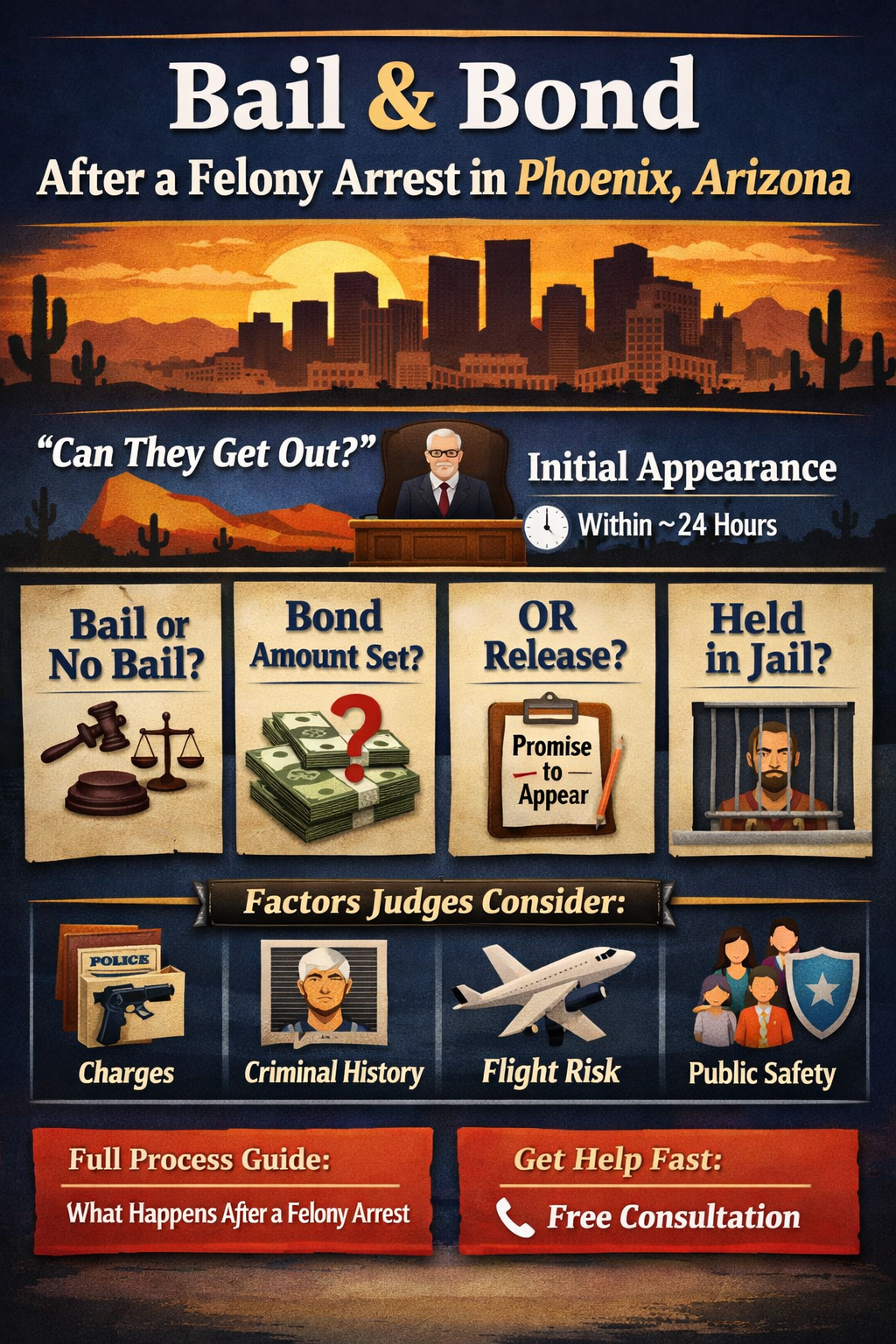
What Happens After a Felony Arrest in Prescott, Arizona

Felony cases in Prescott are typically handled through Yavapai County courts, where procedures and timelines can differ from other parts of Arizona.

Being arrested for a felony in Prescott, Arizona is a frightening and overwhelming experience. Many people have never been inside a jail or courtroom before, yet suddenly they are facing serious criminal charges, potential prison time, and long-term consequences that could affect their career, family, and future.

Understanding what happens after a felony arrest in Prescott can reduce uncertainty and help you make better decisions at every stage. The criminal process moves quickly, and what you do—or don’t do—early on can significantly affect the outcome of your case.

Below is a clear, step-by-step explanation of the felony process in Prescott and Yavapai County.


Step 1: The Felony Arrest

A felony arrest in Prescott usually occurs after:

  • A police investigation

  • A traffic stop or roadside encounter

  • A domestic disturbance call

  • An allegation involving drugs, violence, or weapons

  • A warrant issued by a judge

Once arrested, you may be taken to the local jail for booking, which includes fingerprints, photographs, and basic personal information. Officers may attempt to question you during or after this process.

Important: Use Your Rights

You are not required to explain yourself or answer questions beyond basic identifying information. Statements made during this time can later be used against you.


Step 2: Booking and Jail Detention

After the arrest, you are booked into jail. Depending on the charge and circumstances, you may:

  • Be released with a court date

  • Be held until an initial appearance

  • Be held without immediate bond (in serious cases)

Felony cases are treated more seriously than misdemeanors, and release decisions depend on:

  • The nature of the charge

  • Prior criminal history

  • Risk of flight

  • Public safety concerns


Step 3: Initial Appearance Before a Judge

Your initial appearance typically occurs within 24 hours of arrest.

At this hearing, a judge will:

  • Inform you of the felony charges

  • Advise you of your rights

  • Decide release conditions or bond

  • Set future court dates

This is not when guilt or innocence is decided. However, what happens here can impact your freedom while the case is pending.

Having a criminal defense lawyer involved early can influence bond conditions and protect you from unnecessary restrictions.


Step 4: Felony Charges Filed by the Prosecutor

After arrest, the prosecutor reviews the case to decide whether to formally file felony charges. This decision is based on:

  • Police reports

  • Evidence gathered

  • Witness statements

Not every arrest results in charges. In some cases, charges may be reduced, delayed, or declined entirely. Early legal intervention can sometimes prevent weak cases from moving forward.


Step 5: Arraignment

At the arraignment, you are formally charged and asked to enter a plea:

  • Not guilty

  • Guilty (rare at this stage)

  • No contest

Most felony defendants plead not guilty initially to preserve defenses and allow time for investigation.

The court also addresses:

  • Release conditions

  • No-contact orders

  • Travel restrictions


Step 6: Pretrial Phase and Case Investigation

This is often the most important stage of a felony case.

During pretrial, your defense attorney may:

  • Review police reports and evidence

  • Examine body-camera footage

  • Challenge illegal searches or seizures

  • Identify constitutional violations

  • Interview witnesses

  • File motions to suppress evidence

Many felony cases are resolved during this stage through:

  • Charge reductions

  • Dismissals

  • Negotiated plea agreements


Step 7: Grand Jury or Preliminary Hearing (Some Cases)

In certain felony cases, prosecutors must establish probable cause through:

  • A grand jury proceeding, or

  • A preliminary hearing before a judge

Defense involvement here can expose weaknesses in the prosecution’s case early.


Step 8: Trial (If the Case Does Not Resolve Early)

If a felony case goes to trial, the process includes:

  • Jury selection

  • Opening statements

  • Witness testimony

  • Cross-examination

  • Closing arguments

The prosecution must prove guilt beyond a reasonable doubt, a high legal standard.

Many cases never reach trial, but preparation for trial strengthens negotiation leverage.


Step 9: Verdict and Possible Sentencing

If a verdict is reached:

  • Not guilty → the case ends

  • Guilty → the case proceeds to sentencing

Felony sentencing may include:

  • Prison or jail

  • Probation

  • Fines

  • Classes or treatment programs

  • Long-term consequences such as loss of civil rights

Sentencing outcomes vary widely depending on the charge, criminal history, and legal strategy.


Why Early Legal Representation Matters After a Felony Arrest

Felony cases are complex, high-stakes matters. Early legal involvement can:

  • Prevent self-incrimination

  • Challenge illegal police conduct

  • Influence release conditions

  • Identify dismissal opportunities

  • Reduce exposure to prison time

Waiting to “see what happens” often leads to missed opportunities.


Facing a Felony Arrest in Prescott? Get Answers Now

If you or someone you love has been arrested for a felony in Prescott or anywhere in Yavapai County, you don’t have to navigate the process alone.

Speaking with a criminal defense lawyer early allows you to understand your options, protect your rights, and take control of the situation.

December 22, 2025

Being arrested for driving under the influence can feel overwhelming, confusing, and even frightening. If you or a loved one is facing this situation, understanding What to Do After a DUI Arrest in Yavapai County is critical. The steps you take in the first hours and days can significantly affect your case, your driver’s license, and your future.

This comprehensive guide walks you through the legal process, your rights, and the smart actions that can help minimize the consequences under Arizona law.


Understanding a DUI Arrest in Yavapai County

https://www.prescottpolice.org/wp-content/uploads/2022/01/PPD_PatchAlpha_Final.png?utm_source=chatgpt.com

A DUI arrest in Yavapai County usually begins with a traffic stop by local police, the county sheriff, or state troopers. Officers may conduct field sobriety tests, breath tests, or blood tests if they suspect impairment.

Arizona has some of the strictest DUI laws in the country. A driver can be arrested for:

  • A blood alcohol concentration (BAC) of 0.08% or higher

  • Any level of impairment

  • Driving with drugs (legal or illegal) in the system

  • Extreme or aggravated DUI circumstances

Understanding the seriousness of the charge is the first step in knowing What to Do After a DUI Arrest in Yavapai County.


Step 1: Stay Calm and Exercise Your Rights

Immediately after a DUI arrest, emotions often run high. Staying calm is essential.

Your Key Rights

  • You have the right to remain silent

  • You have the right to an attorney

  • You are not required to answer questions about where you were or how much you drank

Be polite, but do not volunteer information. Anything you say can be used against you later.


Step 2: Understand the Immediate Consequences

A DUI arrest triggers two separate processes:

  1. Criminal court case

  2. Administrative driver’s license action

You may receive a notice that your driver’s license will be suspended unless you act quickly. This is one of the most time-sensitive parts of What to Do After a DUI Arrest in Yavapai County.


Step 3: Request a Motor Vehicle Division Hearing Quickly

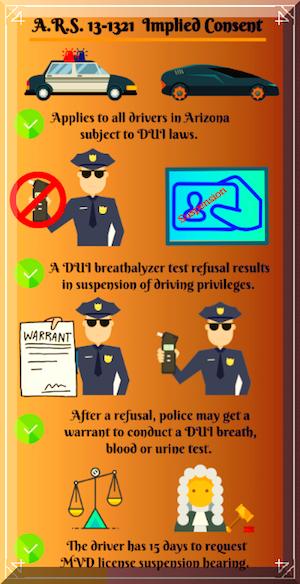
In Arizona, you typically have 15 days from the date of arrest to request a hearing with the Motor Vehicle Division (MVD).

Failing to request this hearing can result in:

  • Automatic license suspension

  • Loss of driving privileges for months

Requesting the hearing may allow you to continue driving temporarily and gives your attorney a chance to review the evidence early.


Step 4: Document Everything You Remember


As soon as possible, write down:

  • Where you were stopped

  • What the officer said

  • Whether tests were explained clearly

  • How sobriety or chemical tests were conducted

Details fade quickly, but they can be crucial in building a defense.


Step 5: Avoid Discussing Your Case Publicly

It may be tempting to explain your situation to friends or on social media. This can seriously harm your case.

  • Avoid posting about the arrest

  • Do not discuss details with anyone except your lawyer

  • Remember that statements can be subpoenaed

Discretion is a smart move when deciding What to Do After a DUI Arrest in Yavapai County.


Step 6: Hire an Experienced DUI Defense Lawyer

One of the most important steps is consulting a qualified DUI defense attorney familiar with Yavapai County courts.

How a Lawyer Helps

  • Reviews police procedures and evidence

  • Challenges breath or blood test accuracy

  • Negotiates reduced charges or penalties

  • Represents you in court and MVD hearings

Legal guidance can make a substantial difference in the outcome.


Step 7: Prepare for the Court Process

After a DUI arrest, you may face:

  • Arraignment

  • Pretrial conferences

  • Motions hearings

  • Trial or plea negotiations

Your attorney will explain each stage and help you prepare. Showing up on time, dressing appropriately, and following legal advice all matter.


Potential Penalties for a DUI Conviction

Penalties vary based on circumstances but may include:

  • Jail time

  • Heavy fines and court fees

  • License suspension or revocation

  • DUI education or treatment programs

  • Ignition interlock device installation

Knowing the stakes reinforces why understanding What to Do After a DUI Arrest in Yavapai County is so important.


Common Mistakes to Avoid After a DUI Arrest

Avoid these costly errors:https://courts.yavapaiaz.gov/files/sharedassets/courts/v/3/superior-court/images/courthouse4web-pano-2.jpg?utm_source=chatgpt.com

  • Missing court dates

  • Ignoring license suspension notices

  • Talking too much to law enforcement

  • Waiting too long to hire a lawyer

Each mistake can worsen your situation.


Frequently Asked Questions (FAQs)

https://www.arizonacriminaldefenselawyer.com/static/2024/10/44_implied_consent_13-1321.jpg?utm_source=chatgpt.com

1. What happens immediately after a DUI arrest in Yavapai County?

You may be taken to jail, released with a court date, and given notice of a potential license suspension.

2. Can I still drive after a DUI arrest?

Possibly, but only if you request an MVD hearing within the required timeframe.

3. Do I have to take field sobriety tests?

Field sobriety tests are usually voluntary, but refusing chemical tests can lead to automatic license suspension.

4. Will I go to jail for a first DUI offense?

Jail time is possible, but penalties depend on BAC level and case details.

5. How long does a DUI case take in Yavapai County?

Cases may take several months, depending on complexity and court schedules.

6. Is hiring a DUI lawyer really necessary?

Given Arizona’s strict DUI laws, legal representation is strongly recommended.


Conclusion: Take Action Immediately

Knowing What to Do After a DUI Arrest in Yavapai County can protect your rights, reduce penalties, and help you move forward with confidence. Time is critical, especially when it comes to your driver’s license and legal defense.

Taking prompt, informed action—and seeking experienced legal guidance—can make all the difference in the outcome of your case.

December 12, 2025

Arizona DUI Penalties in Prescott, AZ (2025 Guide)

Everything you need to know about first-time DUI, second DUI, Extreme DUI, and Super Extreme DUI penalties in Prescott and Yavapai County.


Quick Answer

In Prescott, Arizona, a DUI carries mandatory jail, license suspension, fines, interlock ignition device, and alcohol treatment. Penalties vary based on BAC:

  • Standard DUI (0.08–0.149): 10 days jail (9 suspended), ~$1,500+ in fines, 90-day suspension

  • Extreme DUI (0.15–0.199): 30 days jail (21 suspended), ~$2,700+

  • Super Extreme DUI (0.20+): 45 days jail (31 suspended), ~$3,200+

  • Second offenses within 7 years carry far higher jail, higher fines, and longer revocations

Prescott courts strictly enforce Arizona DUI statutes, and all jail time is served at the Yavapai County Detention Center unless home detention is later approved.


What Counts as a DUI in Arizona?

Arizona’s DUI laws are found in A.R.S. §§ 28-1381, 28-1382, and 28-1383.
A person may be charged if:

  • BAC is 0.08 or higher, OR

  • The driver is impaired to the “slightest degree”

  • The person is driving under the influence of alcohol, drugs, or medication

  • BAC is measured within 2 hours of driving

Prescott courts (Prescott Justice Court or Prescott Consolidated Court) apply these penalties uniformly under state law.


1. First-Time Standard DUI (0.08–0.149 BAC)

Charge: Class 1 Misdemeanor
Statute: A.R.S. § 28-1381(A)(1)

Penalties

  • 10 days jail (9 suspended with alcohol screening & treatment)

  • Approx. $1,500–$1,800 in fines & assessments

  • 90-day license suspension (MVD)

  • Ignition interlock: 12 months (can reduce to 6 months)

  • Mandatory alcohol screening & classes

  • Up to 5 years probation

  • Community service possible

Prescott Notes

  • Cases typically heard at Prescott Justice Court

  • Some courts require proof of completed alcohol screening before sentencing

  • Jail is served in Yavapai County Detention Center


2. Second Standard DUI (within 7 years)

Penalties

  • 90 days jail (60 may be suspended with treatment, 30 consecutive required)

  • Approx. $3,500+ fines

  • 1-year license revocation

  • Interlock: 12 months

  • Mandatory alcohol treatment

  • Community service required

Prescott Notes

  • Yavapai County prosecutors rarely reduce second-offense DUIs

  • Home detention eligibility reviewed on a case-by-case basis

  • Court may require compliance review hearings


3. First Extreme DUI (0.15–0.199 BAC)

Statute: A.R.S. § 28-1382(A)(1)

Penalties

  • 30 days jail (21 suspended with treatment)

  • Approx. $2,700–$3,200 fines & assessments

  • 90-day license suspension

  • Interlock: 12 months

  • Alcohol screening & treatment mandatory

Prescott Notes

  • Prescott, Chino Valley, and PV police frequently file Extreme DUIs from speeding stops and CR 89A patrols

  • Judges may require a portion of the jail term served “straight time” before home detention


4. Second Extreme DUI (within 7 years)

Penalties

  • 120 days jail (60 consecutive)

  • Fines: ~$3,500–$4,500

  • License revocation: 1 year

  • Interlock: Minimum 12 months

  • Mandatory community service

Prescott Notes

  • Yavapai County judges impose strict compliance checks on second extreme offenders

  • Prosecutors may add additional conditions like weekly check-ins


5. First Super Extreme DUI (BAC ≥ 0.20)

Statute: A.R.S. § 28-1382(A)(2)

Penalties

  • 45 days jail (31 suspended with alcohol treatment)

  • Fines: ~$3,200–$3,750

  • 90-day suspension

  • Interlock: 18 months (may reduce to 12)

  • Mandatory screening & treatment

Prescott Notes

  • Super Extreme DUI is one of the harshest misdemeanor penalties in Arizona

  • Yavapai County often requires a significant portion of jail before home detention eligibility

  • Common in cases involving:

    • Whiskey Row bar district

    • SR-69 traffic corridor

    • I-17 stops returning from Phoenix


6. Second Super Extreme DUI (within 7 years)

Penalties

  • 180 days jail

    • 90 consecutive days mandatory

  • Fines: $4,500+

  • License revocation: 1 year

  • Interlock: 24 months

  • Community service required

Prescott Notes

  • Second super extreme cases nearly always proceed through Yavapai County Superior Court

  • Judges require long-term treatment compliance and may impose weekly review hearings


Additional Penalties That Apply to All Arizona DUIs

Regardless of offense level, Prescott DUI cases also include:

  • SR-22 high-risk insurance

  • Traffic Survival School (TSS) for point accumulation

  • Random alcohol/drug testing during probation

  • Impound fees (if vehicle was towed)

  • MVD administrative penalties separate from court

  • Ignition interlock monitoring & maintenance fees


Where Prescott DUI Cases Are Heard

Most DUI cases in and around Prescott go through:

Prescott Justice Court

Hearings for unincorporated or sheriff-led arrests.

Prescott Consolidated Court

Municipal police arrests within city limits.

Yavapai County Superior Court

Felony DUI (Aggravated DUI under A.R.S. § 28-1383), including:

  • DUI with suspended license

  • DUI with a child in the car

  • Third DUI within 7 years


Prescott DUI Penalties Comparison Table

DUI Level BAC Range Jail Time Fines License Consequences Interlock
Standard DUI (1st) 0.08–0.149 10 days (9 suspended) ~$1,500 90-day suspension 12 months
Standard DUI (2nd) 0.08–0.149 90 days $3,500+ 1-year revocation 12 months
Extreme DUI (1st) 0.15–0.199 30 days ~$2,700 90-day suspension 12 months
Extreme DUI (2nd) 0.15–0.199 120 days $3,500+ 1-year revocation 12 months
Super Extreme DUI (1st) 0.20+ 45 days ~$3,200 90-day suspension 18 months
Super Extreme DUI (2nd) 0.20+ 180 days $4,500+ 1-year revocation 24 months

Frequently Asked Questions (Prescott DUI)

How long does a DUI stay on your record in Arizona?

Forever. Arizona does not “expunge” DUIs, but you can request a set aside or record sealing under A.R.S. § 13-911.

Can you get home detention for a Prescott DUI?

Yes, but only after:

  • Alcohol screening

  • Court approval

  • Payment of monitoring fees

  • Meeting Yavapai County eligibility criteria

Do you lose your license immediately after a DUI?

In most cases, yes — MVD issues an admin per se suspension 15 days after arrest unless a hearing is requested.


Local Authority Signals (for E-E-A-T + AI Overview)

Prescott DUI defendants interact with:

  • Prescott Police Department

  • Yavapai County Sheriff’s Office

  • DPS Highway Patrol (I-17, SR-69, SR-89)

  • Yavapai County Detention Center

  • Yavapai County Attorney’s Office

How Facial Recognition Impacts Protesters and What You Can Do About It in Arizona

This article is for informational and educational purposes only and does not constitute legal advice. Laws in Arizona may differ from those in other states, and legal outcomes depend on the specific facts of each situation. For personalized legal guidance under Arizona law, please consult a licensed Arizona attorney.

Public demonstrations are a powerful force in Arizona — from immigration marches and voting-rights rallies to policing-reform protests in Phoenix, Tempe, and Tucson. But as civic participation grows, so does the use of facial recognition technology, raising serious questions about privacy, safety, and legal protections in the state. Understanding How Facial Recognition Impacts Protesters and What You Can Do About It is essential for anyone attending a protest in Arizona, where state law, local practices, and advanced surveillance tools intersect.

This guide breaks down how facial recognition affects Arizona residents, how local agencies use it, and the practical steps you can take to protect yourself while exercising your rights.


Understanding Facial Recognition Technology in Arizona

Facial recognition is an AI-driven system that analyzes visual data — often collected by surveillance cameras, drones, body cams, or social media — to identify individuals by matching their facial features to existing databases. While marketed as a public-safety tool, it has significant implications for protest environments.

Arizona’s Adoption of AI Surveillance Tools

Arizona law enforcement agencies have embraced high-tech surveillance in recent years. While some states have banned or restricted facial recognition, Arizona has no statewide limits on its use as of 2025.

Agencies known to use or test facial recognition tools include:

  • Phoenix Police Department (via Real Time Crime Center & contracted vendors)

  • Arizona Department of Public Safety (AZDPS)

  • Maricopa County Sheriff’s Office

  • Arizona Counter Terrorism Information Center (ACTIC) Fusion Center

Phoenix PD, in particular, has used networked camera systems around protests and large public events, which can feed into analytics and possible facial recognition pipelines.

Types of Facial Recognition Tools Used in Arizona

Arizona agencies typically use:

  • Real-time crowd scanning, especially during large downtown demonstrations

  • Still-image matching against statewide and federal databases

  • ALPR-integrated (license plate reader) systems that connect vehicle and driver data

  • Drone footage analysis, increasingly common in Phoenix and Scottsdale

  • Fusion center cross-agency data sharing, which expands identification reach

Because Arizona is a “sunshine state” in more ways than one, the clarity of outdoor environments — plentiful daylight, open spaces, and large intersections — makes it easier for high-quality face capture.


Why Facial Recognition Affects Arizona Protesters Specifically

Arizona’s unique political climate and enforcement landscape create conditions where protest surveillance is more likely.

Surveillance at Public Gatherings Across Arizona

Public demonstrations in Phoenix, Tucson, Flagstaff, and Tempe frequently attract heavy police presence. These agencies often deploy tools that can feed into facial recognition networks.

Examples include:

  • Downtown Phoenix protests outside the Capitol or City Hall

  • Immigration rallies in Maricopa County

  • ASU-area demonstrations monitored with campus + municipal cameras

  • Events in Old Town Scottsdale, where businesses and city systems maintain dense camera networks

Because Arizona hosts high-tension political topics — border security, policing, elections — surveillance is commonly justified under “public safety” concerns.

Data Collection Under Arizona Law

Arizona’s public records laws (Arizona Revised Statutes Title 39) allow many types of police footage and identification logs to be retained and sometimes accessible.

However, Arizona has no statute requiring agencies to disclose facial-recognition usage to the public.
There are no mandatory data-retention limits, meaning your face could remain in a system indefinitely.

This creates risks for protesters who are simply exercising lawful First Amendment rights.


Civil Rights Implications Under Arizona Law

Arizona protesters rely on a combination of state statutes, constitutional protections, and local ordinances to safeguard their rights.

Free Speech & Assembly in Arizona

Under the First Amendment, Arizona residents have the right to protest peacefully.
Arizona typically requires permits for large street-blocking events, but spontaneous protests responding to breaking events often remain protected.

Relevant Arizona laws include:

  • ARS §13-2902–2904 (disorderly conduct & unlawful assembly definitions)

  • ARS §13-3102 (restrictions on masks during certain criminal acts — this does NOT ban masks at peaceful protests)

  • ARS §28-622 (rules about blocking traffic)

None of these laws prohibit protecting your identity at a lawful demonstration.

Privacy Expectations in Arizona Public Spaces

Arizona courts generally hold that you have a reduced expectation of privacy in public, meaning police can film protests.
But using those recordings to identify political activity, especially through facial recognition, raises constitutional concerns — particularly regarding:

  • First Amendment chilling effects

  • Fourth Amendment protections against unreasonable search

Because Arizona has few surveillance restrictions, protesters must take extra steps to protect their privacy.


Real-World Arizona Examples & Trends

Arizona has seen several protest environments where surveillance became a major concern:

  • 2020 Phoenix protests, heavily monitored with city camera networks

  • SB1070 immigration protests, where large crowds created opportunities for mass data collection

  • Election-related demonstrations in Maricopa County, monitored due to national attention

  • Police-reform protests around the Phoenix Police Headquarters

While not all surveillance involves facial recognition, the infrastructure exists — and continues to expand — making awareness essential.


Protective Strategies for Arizona Protesters

Below are techniques tailored to Arizona’s legal landscape, climate, and surveillance patterns.

Physical Countermeasures Legal Under AZ Law

Arizona does not ban wearing masks at peaceful protests.
You can legally wear:

  • N95 masks, bandanas, or scarves

  • Wide-brimmed hats for shade and camera angle disruption

  • Sunglasses (very common in AZ and helpful for anonymity)

  • Neck gaiters that cover lower facial features

Avoid items intended to obstruct law enforcement visibility (e.g., tactical face armor), which could be misinterpreted under ARS statutes.

Digital Countermeasures for Arizona Demonstrators

Arizona’s wide use of drones, mobile towers, and public livestreams makes digital privacy essential.

Recommended practices:

  • Turn off location services, Bluetooth, and Wi-Fi scanning.

  • Use a passcode, not Face ID.

  • Avoid posting real-time protest photos.

  • Strip metadata using apps like ObscuraCam or built-in photo settings.

  • Bring a secondary phone with minimal personal data.

Behavioral Techniques for AZ Public Events

Arizona’s protest hotspots tend to have predictable camera placements.
Tips include:

  • Stay aware of downtown traffic cameras.

  • Identify police mobile command units, which often include surveillance tech.

  • Avoid lingering near intersections with ALPR systems.

  • Watch for drones — common at Phoenix and Scottsdale events.


Tech Tools to Reduce Facial Recognition Exposure in Arizona

Tools that work well in the Arizona environment include:

  • Signal for encrypted communication

  • BlurFace, DuckDuckGo, or Fawkes to distort photos

  • VPNs for private browsing

  • ScrambleSuit-style tools for metadata minimization

  • Privacy-friendly camera apps that auto-blur bystanders

These tools help, but none guarantee full anonymity — especially in cities like Phoenix where camera density is high.


Organizing Privacy-Conscious Protests in Arizona

Group safety strategies work especially well in AZ’s urban layout.

Suggestions:

  • Identify camera-heavy zones in Downtown Phoenix, Tempe’s Mill Ave, and Tucson’s 4th Ave.

  • Establish no-recording zones during planning meetings.

  • Use walk teams, so people move collectively in high-surveillance areas.

  • Plan shade-friendly routes — hats and masks double as sun protection and privacy tools.


Arizona’s Legal Landscape on Facial Recognition

Arizona has:

  • No statewide restrictions on facial recognition

  • No required transparency reports

  • Active use of fusion-center data sharing (ACTIC)

  • Minimal oversight on retention or auditing

Some Arizona cities have explored restrictions, but no major bans have passed.


Advocacy Efforts in Arizona

Groups involved in surveillance transparency include:

  • ACLU of Arizona

  • Arizona Justice Project

  • Electronic Frontier Foundation (EFF) (national but active in AZ privacy cases)

  • Local community organizations pushing for tech oversight

Relevant resource:
https://www.acluaz.org


Frequently Asked Questions (Arizona-Specific)

1. Is it legal to wear a mask at a protest in Arizona?
Yes. Arizona does not ban masks at lawful demonstrations.

2. Can police use drones to scan faces at Arizona protests?
Yes — drones are permitted in public spaces, and footage may be analyzed.

3. Can Arizona police demand I unlock my phone?
They cannot force you to reveal your passcode without a warrant.

4. Are body cam videos from AZ protests subject to public records?
Yes, under ARS §39, but agencies may redact footage.

5. Can facial recognition be used even if I did nothing wrong?
Yes. Arizona has no law restricting use to criminal investigations.

6. What if I believe Phoenix PD used facial recognition on me?
You can file a public records request or contact the ACLU of Arizona.


Conclusion: Protecting Yourself While Advocating for Change in Arizona

Protesting in Arizona is a powerful way to speak up — and with the right preparation, you can protect both your voice and your identity. Understanding How Facial Recognition Impacts Protesters and What You Can Do About It empowers you to navigate Arizona’s unique surveillance landscape with confidence.

Arizona’s laws continue to evolve, but your commitment to privacy, awareness, and safety ensures you can stand up for what matters while staying protected.

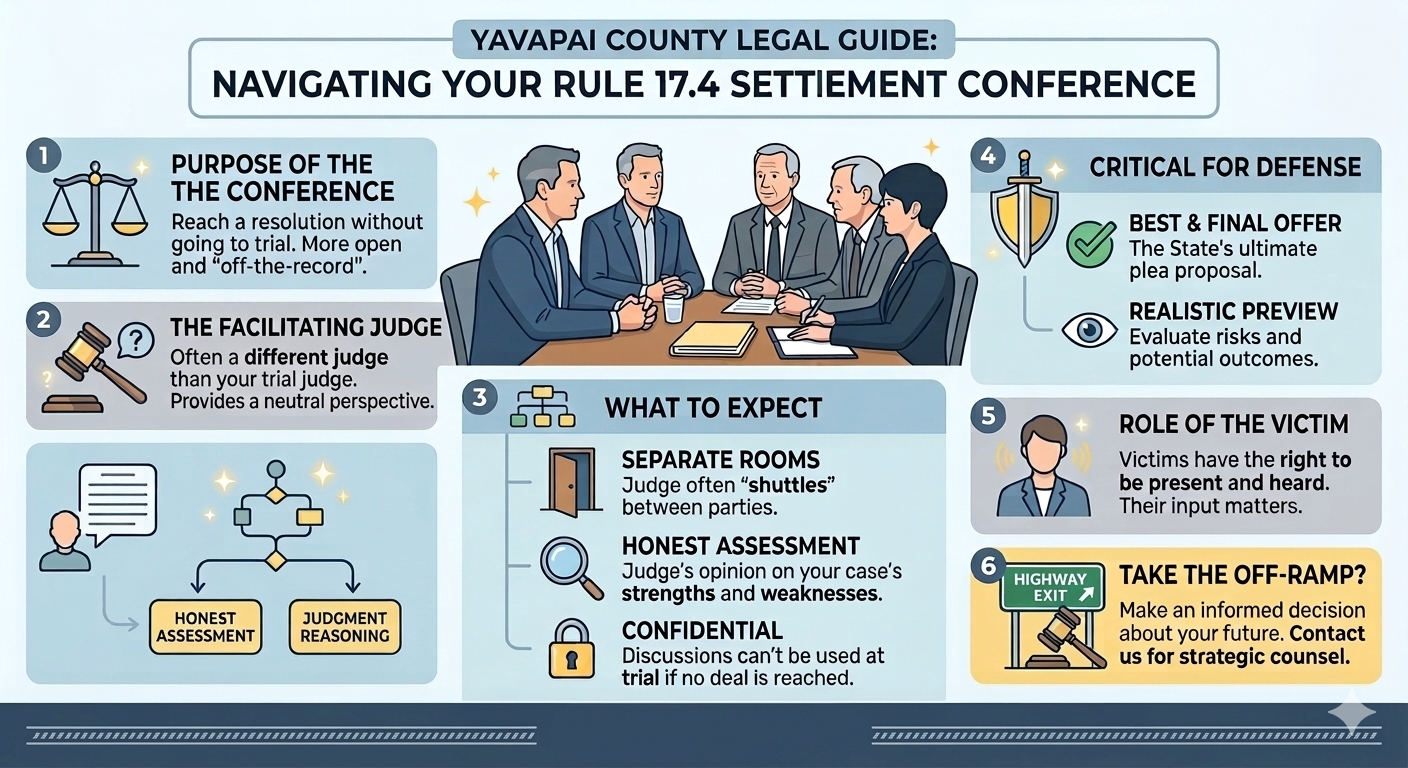
Controlled Substances in Arizona (Prescott): Schedules, Penalties & Defenses

Charged with a drug offense in Prescott or anywhere in Yavapai County? Arizona treats controlled-substance crimes seriously, but you have options. Here’s a clear, local guide to how federal “schedules” work, how Arizona charges these cases, and what defenses might apply.

Ted Law | DUI & Criminal Defense – Prescott
(928) 776-1782paralegal@tedlaw.net
140 N Montezuma St, Prescott, AZ 86301
Free, confidential consultation.


What is a “controlled substance”?

Under the federal Controlled Substances Act (CSA), drugs are grouped by “Schedules” based on medical use and abuse potential:

  • Schedule I: high abuse potential, no accepted medical use under federal law (e.g., heroin, LSD, MDMA). Cannabis remains Schedule I federally, but Arizona voters legalized limited adult possession under Prop 207—see below.

  • Schedule II: high abuse potential but accepted medical use (e.g., cocaine, methamphetamine, fentanyl, oxycodone, Adderall).

  • Schedule III: moderate/low physical dependence (e.g., ketamine, anabolic steroids, testosterone).

  • Schedule IV: lower abuse risk (e.g., Xanax, Valium, Ambien, Tramadol).

  • Schedule V: lowest abuse risk (certain cough syrups and anti-diarrheals).

Important Arizona note: Adult recreational marijuana is legal in limited amounts under A.R.S. § 36-2852 (Prop 207). Selling without a license, possessing over the lawful limit, public use, or under-21 possession can still lead to criminal charges.


How Arizona charges controlled-substance cases

Most drug crimes are found in A.R.S. §§ 13-3401–3415. Common charges we see in Prescott/Yavapai County include:

  • Possession of a dangerous drug (A.R.S. § 13-3407) – typically a Class 4 felony

  • Possession of a narcotic drug (A.R.S. § 13-3408) – typically a Class 4 felony

  • Possession of drug paraphernalia (A.R.S. § 13-3415) – often a Class 6 felony (Prop 207 carved out most marijuana-only paraphernalia)

  • Possession for sale / transportation / manufacture – felony, with harsher ranges tied to the drug and quantity

  • Prescription fraud / forged scripts / doctor shopping – felony

Penalties depend on the drug type, weight, intent (personal use vs. sale), priors, and whether the State alleges “threshold” amounts. Consequences can include:

  • Felony conviction (record, firearm and voting restrictions)

  • Probation or prison (months to years)

  • Fines, surcharges, restitution

  • Driver license impacts and immigration consequences (for non-citizens)

  • Mandatory treatment or drug court (in appropriate cases)


Marijuana: where state and federal law diverge

  • Arizona (Prop 207): Adults 21+ may possess up to 1 ounce of marijuana (with a smaller cap on concentrates) and grow a limited number of plants at a primary residence. Exceeding limits, selling without a license, or under-21 possession can still be charged.

  • Federal law: Cannabis remains Schedule I. Federal arrests are uncommon for personal possession cases handled locally, but interstate conduct and federal lands (e.g., national forests/parks) are different animals.


Defenses we routinely explore

Every case is unique, but these are frequent, effective angles:

  • Illegal stop, search, or seizure (Fourth Amendment violations → suppression of evidence)

  • No knowledge / no dominion and control (actual vs. constructive possession)

  • Personal use vs. “for sale” (challenge weight, packaging, cash, texts, scales, expert opinions)

  • Lab & chain-of-custody issues (contamination, mislabeling, non-confirmatory testing)

  • Prescription / medical justification (for scheduled meds)

  • Prop 207 protections (marijuana possession within lawful limits)

  • Entrapment or due-process concerns in undercover operations

  • Diversion / treatment eligibility (where appropriate)


What to do now (it helps your defense)

  1. Do not discuss the facts with anyone but your lawyer.

  2. Save all paperwork (citation, release conditions, inventory/property sheets).

  3. Write a timeline of the stop, search, and any statements.

  4. Make a meds list (prescriptions, over-the-counter, medical marijuana card status).

  5. Call a local attorney quickly—early motions can make or break a case.


Speak with a Prescott drug-crimes lawyer today

We practice in Prescott Justice Court and Yavapai County Superior Court, and we know the local procedures, prosecutors, and options (including diversion and treatment pathways where available).

Ted Law | DUI & Criminal Defense – Prescott
(928) 776-1782paralegal@tedlaw.net
140 N Montezuma St, Prescott, AZ 86301
Free consultation. Immediate help available.

This page is general information, not legal advice. Outcomes depend on your specific facts.

September 3, 2025

Protesting in Prescott, AZ: Know Your Rights & What To Do If You’re Arrested

Arrested or cited after a protest in Prescott or anywhere in Yavapai County?
Call Ted Law (Prescott): 928-776-1782
140 N Montezuma St, Prescott, AZ 86301
Free, confidential consultation.


Your First Amendment rights in Arizona

Peaceful protests, rallies, and marches are protected by the U.S. Constitution. Police can’t arrest you just for protesting. Arrests typically happen when officers believe a separate law was broken (e.g., blocking traffic without a permit, refusing lawful orders, property damage, or violence).

Arizona (and Prescott) may enforce reasonable time/place/manner rules—think permits, sound limits, and route control. Those rules regulate how you protest, not what you say.


Prescott-specific tips (where and how to protest)

  • Public forums—like sidewalks, streets, and the Courthouse Plaza area—carry the strongest free-speech protections. Stay on sidewalks and keep entrances clear (e.g., shops along Whiskey Row).

  • Marching in the street generally requires a permit and a defined route. Without one, you risk an “obstructing a thoroughfare” charge.

  • Private property (shopping centers, parking lots) usually requires owner permission; otherwise you could face criminal trespass.


Charges we most often see in Yavapai County protest cases

  • Unlawful assembly (A.R.S. § 13-2902)

  • Riot (A.R.S. § 13-2903)

  • Disorderly conduct (A.R.S. § 13-2904)—includes unreasonable noise, fights, or reckless weapon handling

  • Obstructing a public thoroughfare (A.R.S. § 13-2906)

  • Failure to comply with a lawful order / traffic-related offenses

  • Resisting arrest (A.R.S. § 13-2508)—even “going limp” can be charged as passive resistance

  • Criminal damage (A.R.S. § 13-1602)

Being nearby when others break the law is not a crime. But ignoring a lawful dispersal order or even minor physical resistance can still lead to charges.


If police declare an “unlawful assembly”

  • Listen for the order (and route of egress) and leave promptly.

  • Record from a safe distance without interfering.

  • Don’t argue on the street—save it for court.


If you’re stopped, detained, or arrested

  • Ask: “Am I free to leave?” If yes, walk away calmly.

  • If not: “I’m exercising my right to remain silent and I want a lawyer.”

  • Do not consent to searches of your person, bag, or phone.

  • You can record officers in public if you don’t interfere or violate distance directives.

  • Provide ID only when legally required.

  • Say nothing on social media about your case.


After an arrest in Prescott or Prescott Valley

  1. Call Ted Law (928-776-1782) as soon as you can.

  2. Write down details while fresh: location, what officers said, dispersal warnings, badge names/numbers, witnesses, nearby cameras.

  3. Preserve evidence: original videos/photos, clothes, injuries.

  4. Don’t miss court dates—failure to appear can trigger a warrant.


How we fight protest-related charges in Yavapai County

  • First Amendment defenses: overbroad or vague orders; improper time/place/manner enforcement; selective/retaliatory policing.

  • Probable-cause challenges: presence ≠ participation; we separate your conduct from others’.

  • Video forensics: sync body-cams, bystander clips, and nearby surveillance to build the real timeline.

  • Suppression motions: unlawful stops, seizures, or phone searches.

  • Negotiation & dismissals: diversion, reduced counts, or outright dismissals when evidence is thin.


Speak to a Prescott protest defense lawyer today

Ted Law | DUI & Criminal Defense
928-776-1782140 N Montezuma St, Prescott, AZ 86301
Same-day consultations • Flexible payment options

This page is general information, not legal advice. Local ordinances and permitting rules can change—call us to review your situation.

Accused in Prescott or anywhere in Yavapai County? Child-abuse allegations can trigger both a criminal case and a DCS investigation. Get counsel before you speak with police, DCS, or school officials.

Free consultation — Ted Law (Prescott)
928-776-1782140 N Montezuma St, Prescott, AZ 86301


What Arizona Law Calls “Child Abuse” (ARS § 13-3623)

Under Arizona law, “child abuse” includes any of the following involving a minor:

  • Causing physical injury,

  • Allowing a child’s health to be injured while in your care/custody, or

  • Placing a child in a situation that endangers health or safety,

  • As well as unlawful imprisonment and sexual abuse/assault.

The charge level depends on both risk/ injury and your mental state:

  • Criminal negligenceClass 4 felony if circumstances were likely to cause death/serious injury (Class 6 if not likely).

  • RecklessnessClass 3 felony (Class 5 if not likely).

  • Intentional/Knowing (child under 15) → Class 2 felony (Class 4 if not likely).

Arizona also treats exposing a child to toxic/volatile chemicals (e.g., drug-lab environments) as child abuse.


Lawful Discipline vs. Abuse: Where Prescott Courts Draw the Line

Parents may use reasonable corporal discipline. It crosses into criminal conduct when:

  • There is actual injury (e.g., patterned bruises, fractures),

  • The method creates a substantial risk of serious harm, or

  • The force is unreasonable for the child’s age/size and the situation (object used, duration, location of marks).

Situations that often lead to charges or DCS findings in Yavapai County:

  • Striking with objects (belts/cords), shaking, grabbing that leaves bruises,

  • Locking a child in a room/garage (unlawful imprisonment),

  • Withholding medical care or leaving a child in a vehicle,

  • Proximity to drug manufacture or volatile chemicals.


What the Prosecutor Must Prove

To convict, the State must show beyond a reasonable doubt:

  1. Conduct: You caused/allowed injury or significant risk;

  2. Causation: Your act/omission led to the injury/risk;

  3. Mental state: Negligent, reckless, knowing, or intentional (as charged);

  4. Victim/Jurisdiction: The person harmed was a child in Arizona.

Evidence can include medical records, photos, officer body-cam, DCS reports, school/medical-provider statements, and any statements you made.


Prescott-Specific Realities (Yavapai County)

  • Parallel DCS cases: DCS can impose safety plans or file dependency actions even if criminal charges are reduced or dismissed.

  • Mandatory reporters: YRMC providers, teachers, and counselors must report; many cases start here.

  • Release conditions: No-contact orders and temporary custody limits are common—violations create new charges.


Defenses We Often Use

Every case is fact-specific, but effective defenses may include:

  • Reasonable parental discipline (minor, transient marks; proportionate force),

  • No criminal negligence / accident (and prompt medical care sought),

  • Alternative cause (sports injuries, medical conditions, accidental mechanisms),

  • Insufficient or unreliable proof (inconsistent accounts; flawed forensic conclusions),

  • Constitutional violations (unlawful search, Miranda/interrogation issues),

  • DCS procedure challenges (improper child interviews; incomplete investigation).


If You’re Accused in Prescott: Do & Don’t

Do

  • Say: “I’m invoking my right to remain silent and my right to an attorney.”

  • Preserve evidence (date-stamped photos, texts, medical records); list witnesses.

  • Follow all court/DCS orders to the letter.

Don’t

  • Don’t speak to police or DCS without counsel.

  • Don’t contact the reporting party to “clear it up.”

  • Don’t post about the case online.


Possible Penalties (Snapshot)

Depending on the felony class and history, child-abuse convictions can bring prison, probation limits, fines/restitution, and long-term effects on gun rights, employment/licensing, immigration, and custody. A targeted strategy can sometimes reduce charges (e.g., to disorderly conduct or endangerment) or achieve dismissal where proof falls short.


Talk to a Prescott Child-Abuse Defense Lawyer Now

Early intervention can protect your rights and shape outcomes in both criminal court and DCS.

Ted Law | DUI & Criminal Defense — Prescott
140 N Montezuma St, Prescott, AZ 86301
Call 928-776-1782Free, confidential consult (phone/video/in-person)

This page is general information, not legal advice. For guidance on your specific situation, contact our Prescott office.

August 8, 2025

Resisting Arrest in Prescott, AZ (ARS § 13-2508): Charges, Penalties, and Defenses

If you’re arrested in Prescott or anywhere in Yavapai County, a separate “resisting arrest” count can stack on top of whatever prompted the stop—sometimes turning a bad night into a felony case. Here’s what Arizona law says, how prosecutors try to prove it, and the defenses a good lawyer can use to push back.

What Arizona Calls “Resisting Arrest”

Under A.R.S. § 13-2508, someone “resists” when they intentionally try to stop an officer from making an arrest by:

  • Using or threatening physical force, or

  • Creating a substantial risk of bodily injury to the officer, or

  • Engaging in passive resistance (a non-violent physical act or omission that delays or hinders an arrest).

You must reasonably know it’s a peace officer acting in the line of duty. Also important: even if you believe the arrest is unlawful, Arizona expects you not to resist. The place to fight it is in court, not on the sidewalk.

Common examples in Prescott cases

  • Pulling away, flailing, or stiff-arming while being cuffed

  • Running, hiding, or refusing to get out of a vehicle

  • Going limp, turtling your hands under your body, or star-fishing on the ground

  • Squaring up, threatening, or any move that creates a risk of injury

How It’s Charged

  • Class 6 felony if force is used/threatened or your actions create a substantial risk of injury.

  • Class 1 misdemeanor if it’s passive resistance only.

Possible Penalties

Felony (Class 6, non-dangerous)

  • Often probation eligible for first-timers, but can include jail or prison (months up to ~2 years+ depending on history).

  • Fines (up to $150,000 plus surcharges), classes, community service, and a felony record that affects voting, firearms, housing, and jobs.

Misdemeanor (Class 1)

  • Up to 6 months in jail, 3 years’ probation, and fines up to $2,500 plus surcharges.

  • Court-ordered counseling or community service is common.

Penalties swing based on your record, whether anyone was hurt, and the judge’s view of the video (body-cam/DVR).

What Prosecutors Must Prove

To convict, the State must show—beyond a reasonable doubt—that you:

  1. Intentionally tried to prevent or delay the arrest; and

  2. Knew (or reasonably should have known) the person was an officer; and

  3. Used/threatened force or created a substantial risk of injury (felony), or engaged in passive resistance (misdemeanor).

Expect evidence like body-cam, dash-cam, officer reports, witness statements, and (unfortunately) your own recorded words.

Defenses That Can Work

The right defense depends on the footage and facts, but we commonly argue:

  • No intent to resist (confusion, panic, pain response, hearing issues, or not understanding commands).

  • No “force” / no “substantial risk” (what happened was passive resistance at most).

  • Identification problems (lighting, positioning, multiple officers, quick struggle).

  • Unlawful escalation / constitutional violations (bad stop, excessive force, Miranda issues, coerced statements).

  • Medical factors (injury, anxiety, PTSD, sensory/auditory limitations impacting compliance).

Sometimes the win is a dismissal; sometimes it’s reducing a felony to a misdemeanor, or securing diversion or no-jail probation.

What To Do Right Now

  • Stop talking about the case (to anyone but your lawyer).

  • Save your evidence: names of witnesses, your injuries, phone video, clothing, receipts/locations.

  • Get a lawyer involved fast—early negotiations often decide whether this stays a felony.


Talk to a Prescott Resisting-Arrest Lawyer Today

Get a local team that knows Yavapai County practices, judges, and charging habits—and that will dissect the video frame-by-frame.

Ted Agnick | DUI & Criminal Attorney (Prescott)
140 N Montezuma St, Prescott, AZ 86301
Free Consultation: 928-776-1782

We’re here 24/7 to step in, protect your rights, and fight for the best outcome possible.

August 3, 2025

Selling “Fake” or Synthetic Drugs in Prescott:
Why It’s Still a Serious Felony in Arizona

Handing a buyer a bag of baking soda and calling it cocaine, or peddling “spice” marketed as marijuana, might look like a harmless hustle—but Arizona law treats it almost as harshly as trafficking the real thing. Both state statutes and federal codes outlaw the manufacture, possession, or sale of imitation or counterfeit drugs, and the penalties can include years in prison. If you’re under investigation—or think you might be—read on for the key facts and your next steps.


1. Arizona’s Imitation-Drug Statute (A.R.S. § 13-3452)

Arizona makes it a crime to “manufacture, sell, transfer, possess with intent to sell, or offer for sale any imitation controlled substance or counterfeit pharmaceutical”.

  • Class 6 felony for most violations

  • Class 5 felony if the buyer is under 18

Possession with intent to sell—even if no transaction occurs—can trigger a felony arrest.


2. “Imitation” and “Synthetic” Defined

Category Common Examples Why It’s Illegal
Counterfeit Rx drugs Fake Adderall, Xanax pressed tablets Fraud & public-health risk
Imitation street drugs Flour sold as heroin, crushed Tylenol sold as meth Intent to deceive buyer
Synthetic highs “Spice,” K2, bath salts Classified as dangerous narcotics under AZ schedules

3. Federal Overlay: Fraud & Counterfeit Drug Laws

  • 21 U.S.C. § 331 – Bans sale of counterfeit medications in interstate commerce (including online sales).

  • Wire & mail fraud statutes – Taking money under false pretenses exposes sellers to federal fraud counts (each sale can be a separate felony).


4. Potential Penalties

Charge Prison Range (First Offense) Fines & Other Consequences
AZ Class 6 felony 4 months – 2 years Up to $150,000 + surcharges; felony record
AZ Class 5 felony (sale to a minor) 6 months – 2.5 years Higher presumptive sentence
Federal counterfeit-drug conviction Up to 20 years per count $250,000+ fine; forfeiture

Collateral fallout includes loss of civil rights, professional-license problems, immigration consequences, and difficulty securing housing or employment.


5. Defenses We Explore

  1. Lack of intent to mislead

  2. No knowledge of substance’s nature

  3. Constitutional violations (invalid search, Miranda issues)

  4. Insufficient evidence / unreliable lab analysis

  5. Mistaken identity or entrapment

Every case turns on small details—texts, surveillance footage, lab results, labelling on the package—so early evidence preservation is critical.


6. Arrested or Contacted by Detectives? Do This Immediately

  1. Stay silent. Politely invoke your right to remain silent and ask for an attorney.

  2. Do not consent to any search of your phone, vehicle, or home.

  3. Call a lawyer who understands both state and federal drug statutes.


7. Prescott Legal Help—24/7

Ted Law has defended felony drug cases in Yavapai County for over two decades. We know the local courts, prosecutors, and diversion options—and we’re ready to move fast to protect your freedom.

  • Office: 140 N Montezuma St, Prescott, AZ 86301

  • Phone (24 hrs): (928) 776-1782

  • Email: paralegal@tedlaw.net

Free, confidential consultation—call or email today and put experience between you and a felony charge.


July 31, 2025

Proposition 207 & Marijuana-Conviction Expungements
What Prescott Residents Need to Know in 2025


1. Why Prop 207 Matters

When Arizona voters approved Proposition 207 (the Smart & Safe Act), they did three big things:

  1. Legalized adult-use marijuana (age 21+).
  2. Created sensible possession limits (2.5 oz total / 12.5 g concentrate).
  3. Added the first true “expungement” statute in state history – A.R.S. § 36-2862.

For anyone in Yavapai County carrying an old marijuana conviction, this law is the one-time opportunity to wipe the slate completely clean.


2. “Set Aside” vs “Expungement” – A Night-and-Day Difference

Feature Traditional Set-Aside (A.R.S. § 13-905) Prop 207 Expungement
Removes civil disabilities? ✔ Yes ✔ Yes
Still visible to employers / DPS / landlords? Yes No – record is sealed
Can prosecutors use it as a prior offense? ✔ Still usable against you ✘ Cannot be alleged again
You may legally say the arrest/conviction never happened ✘ No Yes

Bottom line: an expungement is the gold standard; a set-aside is merely a partial fix.


3. Offenses Eligible for Expungement

If the offense occurred on or before November 30, 2020 and the conviction fits any of these categories, you may qualify:

  1. Possession / Transport / Consumption of ≤ 2.5 oz (≤ 12.5 g concentrate).
  2. Grow / Cultivate / Process ≤ 6 plants at your primary residence.
  3. Possession of marijuana paraphernalia for personal use.

Important: Classifications under the former A.R.S. § 13-3405 (possession) or § 13-3408 (paraphernalia) can still qualify – but the exact language in the complaint, plea, or verdict controls eligibility. A detailed record review is essential.


4. The 2025 Expungement Procedure

  1. Collect Records – sentencing minute entries, plea agreements, police reports.
  2. Draft & File Petition in the Prescott Justice Court or Yavapai Superior Court (depending on where the case was filed).
  3. Prosecutor Review (30 days) – County Attorney must show clear & convincing evidence of ineligibility to block your petition.
  4. Hearing (if necessary) – many cases are granted without a hearing when facts are undisputed.
  5. Order Granted – Court instructs DPS, YCSO, Prescott PD, and any other agencies to seal all records of arrest, charge, conviction, and sentence.
  6. Clean Slate – You may truthfully answer “No” to any question about that arrest or conviction.

5. Common Eligibility Pitfalls

  • Year of offense vs. date of conviction
  • Quantity allegations in the original complaint
  • “For sale” or transport-for-sale language (usually not expungeable)
  • Multiple counts in a single case (mixed eligible & ineligible charges)
  • Prior probation violations that changed the offense class

A careful legal analysis avoids surprises and cures record-keeping errors that might block expungement.


6. Why Hire Ted Law

  • Local Prescott presence – we appear weekly in Yavapai Superior & Prescott Justice Courts.
  • Decades of felony-level criminal-defense experience.
  • We handle all paperwork, coordinate with DPS, and verify every database is cleared.
  • Flat-fee expungement packages – no hidden costs.

7. Free Record-Check & Consultation

  • Phone: (928) 776-1782 (24/7)
  • Email: paralegal@tedlaw.net
  • Office: 140 N Montezuma St, Prescott, AZ 86301

Take the next step: One call can erase an old marijuana conviction and open doors to housing, employment, and professional licensing.


Disclaimer: This article is educational only and not legal advice. Eligibility turns on the unique facts of each case. Consult counsel to evaluate your record.

1 2 3 5