What Happens After a Felony Arrest in Prescott, Arizona
Felony cases in Prescott are typically handled through Yavapai County courts, where procedures and timelines can differ from other parts of Arizona.
Being arrested for a felony in Prescott, Arizona is a frightening and overwhelming experience. Many people have never been inside a jail or courtroom before, yet suddenly they are facing serious criminal charges, potential prison time, and long-term consequences that could affect their career, family, and future.
Understanding what happens after a felony arrest in Prescott can reduce uncertainty and help you make better decisions at every stage. The criminal process moves quickly, and what you do—or don’t do—early on can significantly affect the outcome of your case.
Below is a clear, step-by-step explanation of the felony process in Prescott and Yavapai County.
Step 1: The Felony Arrest
A felony arrest in Prescott usually occurs after:
-
A police investigation
-
A traffic stop or roadside encounter
-
A domestic disturbance call
-
An allegation involving drugs, violence, or weapons
-
A warrant issued by a judge
Once arrested, you may be taken to the local jail for booking, which includes fingerprints, photographs, and basic personal information. Officers may attempt to question you during or after this process.
Important: Use Your Rights
You are not required to explain yourself or answer questions beyond basic identifying information. Statements made during this time can later be used against you.
Step 2: Booking and Jail Detention
After the arrest, you are booked into jail. Depending on the charge and circumstances, you may:
-
Be released with a court date
-
Be held until an initial appearance
-
Be held without immediate bond (in serious cases)
Felony cases are treated more seriously than misdemeanors, and release decisions depend on:
-
The nature of the charge
-
Prior criminal history
-
Risk of flight
-
Public safety concerns
Step 3: Initial Appearance Before a Judge
Your initial appearance typically occurs within 24 hours of arrest.
At this hearing, a judge will:
-
Inform you of the felony charges
-
Advise you of your rights
-
Decide release conditions or bond
-
Set future court dates
This is not when guilt or innocence is decided. However, what happens here can impact your freedom while the case is pending.
Having a criminal defense lawyer involved early can influence bond conditions and protect you from unnecessary restrictions.
Step 4: Felony Charges Filed by the Prosecutor
After arrest, the prosecutor reviews the case to decide whether to formally file felony charges. This decision is based on:
-
Police reports
-
Evidence gathered
-
Witness statements
Not every arrest results in charges. In some cases, charges may be reduced, delayed, or declined entirely. Early legal intervention can sometimes prevent weak cases from moving forward.
Step 5: Arraignment
At the arraignment, you are formally charged and asked to enter a plea:
Most felony defendants plead not guilty initially to preserve defenses and allow time for investigation.
The court also addresses:
-
Release conditions
-
No-contact orders
-
Travel restrictions
Step 6: Pretrial Phase and Case Investigation
This is often the most important stage of a felony case.
During pretrial, your defense attorney may:
-
Review police reports and evidence
-
Examine body-camera footage
-
Challenge illegal searches or seizures
-
Identify constitutional violations
-
Interview witnesses
-
File motions to suppress evidence
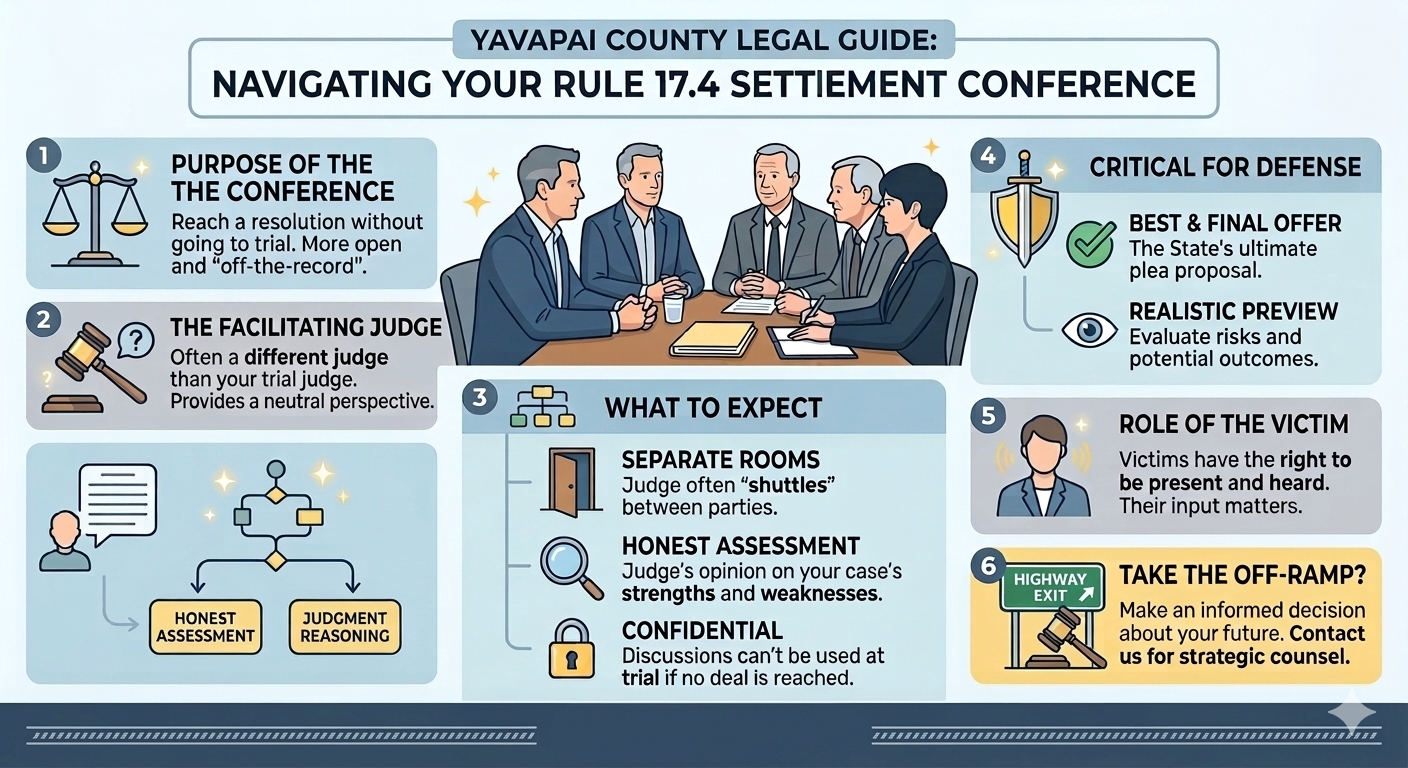
Many felony cases are resolved during this stage through:
Step 7: Grand Jury or Preliminary Hearing (Some Cases)
In certain felony cases, prosecutors must establish probable cause through:
Defense involvement here can expose weaknesses in the prosecution’s case early.
Step 8: Trial (If the Case Does Not Resolve Early)
If a felony case goes to trial, the process includes:
-
Jury selection
-
Opening statements
-
Witness testimony
-
Cross-examination
-
Closing arguments
The prosecution must prove guilt beyond a reasonable doubt, a high legal standard.
Many cases never reach trial, but preparation for trial strengthens negotiation leverage.
Step 9: Verdict and Possible Sentencing
If a verdict is reached:
Felony sentencing may include:
Sentencing outcomes vary widely depending on the charge, criminal history, and legal strategy.
Why Early Legal Representation Matters After a Felony Arrest
Felony cases are complex, high-stakes matters. Early legal involvement can:
-
Prevent self-incrimination
-
Challenge illegal police conduct
-
Influence release conditions
-
Identify dismissal opportunities
-
Reduce exposure to prison time
Waiting to “see what happens” often leads to missed opportunities.
Facing a Felony Arrest in Prescott? Get Answers Now
If you or someone you love has been arrested for a felony in Prescott or anywhere in Yavapai County, you don’t have to navigate the process alone.
Speaking with a criminal defense lawyer early allows you to understand your options, protect your rights, and take control of the situation.